Health and Safety Policy for Cleaner Harringay
 Cleaner Harringay is committed to maintaining a safe, healthy, and professional working environment for every cleaner, supervisor, client representative, and member of the public who may be affected by cleaning activities. This policy sets out the standards, responsibilities, and controls that support safe working practices across all domestic and commercial cleaning tasks. It applies to routine cleans, deep cleans, specialist tasks, and any situation where cleaning work may involve risk.
Our approach is based on prevention, awareness, and accountability. Health and safety is not treated as a separate activity from cleaning; it is part of every task, every visit, and every decision. All workers are expected to use suitable equipment, follow safe procedures, report hazards promptly, and stop work if conditions become unsafe.
We recognise that cleaning work can involve wet floors, chemical products, manual handling, repetitive movement, electrical equipment, and contact with potentially contaminated surfaces. For that reason, Cleaner Harringay requires risk-aware behaviour and practical control measures to reduce the likelihood of injury or illness.

Responsibilities and safe working standards
Management is responsible for providing clear instructions, appropriate training, and safe systems of work. Supervisors must ensure that cleaners understand task requirements, use correct methods, and are equipped with the right tools for the job. Every worker must take reasonable care of their own safety and that of others, and must cooperate with any health and safety arrangements in place.Clients and site occupants also play a role in supporting a safe working environment. Areas should be reasonably accessible, hazards should be reported in advance where possible, and cleaners should be informed of any known risks such as fragile surfaces, restricted access, pets, children, alarms, or isolation requirements. Open communication helps prevent avoidable incidents.
Before any cleaning begins, workers should assess the environment and identify risks such as clutter, poor lighting, loose cables, slippery flooring, unstable furniture, or exposure to aggressive substances. Where a hazard cannot be controlled safely, the task should be delayed, modified, or refused until the risk is reduced.
Equipment, substances, and personal protection
All cleaning equipment must be maintained in good condition and used only for its intended purpose. Damaged mops, frayed cables, broken handles, or faulty electrical items must be taken out of service immediately. Electrical equipment should be checked before use, handled with dry hands where appropriate, and stored safely after use.Cleaning substances must be selected carefully and used according to product instructions. Workers should never mix chemicals unless the manufacturer specifically permits it. Products should be stored in labelled containers, kept away from food, and used with adequate ventilation. When decanting or diluting products, staff must follow safe handling procedures to prevent splashes, inhalation, or accidental contact.
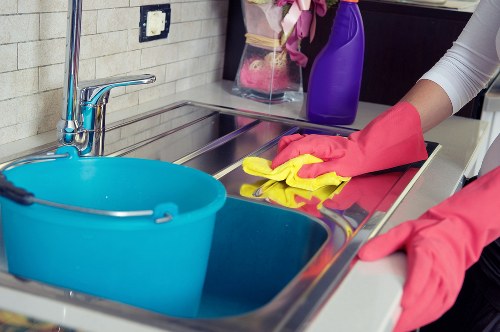
Personal protective equipment may be required depending on the task. This can include gloves, aprons, eye protection, non-slip footwear, or masks where there is a suitable risk. PPE must be worn correctly, replaced when damaged, and cleaned or disposed of according to the task requirements. Protective clothing is a control measure, not a substitute for safe practice.
Manual handling, slips, and day-to-day operational safety
Cleaning tasks often involve lifting, carrying, bending, reaching, and moving items such as vacuum cleaners, buckets, bins, or laundry loads. To reduce strain and injury, workers should use correct lifting techniques, avoid overloading containers, and ask for assistance when an item is too heavy or awkward. Where possible, equipment should be chosen to reduce repetitive physical stress.Slips and trips remain one of the most common risks in cleaning environments. Floors should be signposted when wet, cords should be managed neatly, and obstacles should be removed or reported. Cleaners must work methodically, allowing surfaces to dry where required and keeping walkways clear. Attention to detail is essential, especially in bathrooms, kitchens, entrance areas, and stairways.
Midway through each job, workers should pause to review the area, confirm that no new hazards have appeared, and ensure that equipment is still operating safely. This regular check supports consistent standards and helps prevent minor issues from becoming serious incidents.

Incident reporting, emergencies, and welfare
Any accident, near miss, spill, injury, or unsafe condition must be reported as soon as possible through the agreed internal process. Accurate reporting helps identify patterns, improves prevention, and supports corrective action. Where an incident involves injury, the first priority is to make the area safe, provide basic assistance if appropriate, and seek further help when necessary.Emergency procedures must be understood before work begins. This includes knowing how to respond to fire alarms, evacuations, chemical exposure, lost keys, or medical emergencies. Workers should remain calm, follow site instructions, and never attempt actions beyond their training. If an emergency occurs, the work area should be left secure and any hazards should be communicated promptly.
Welfare is also a central part of this policy. Cleaners should have access to reasonable breaks, drinking water, and appropriate rest where lengthy or physically demanding tasks are involved. Fatigue can reduce concentration and increase the risk of mistakes, so workloads should be planned realistically and adjusted when necessary.

Training, review, and continuous improvement
Cleaner Harringay expects all staff to receive suitable induction and ongoing refresher training in safe cleaning methods, chemical awareness, equipment use, hygiene practice, and emergency response. Training should be practical, relevant, and updated when new products, tools, or procedures are introduced. New workers should be supervised until they are confident and competent.This policy is reviewed regularly to ensure it remains effective, current, and fit for purpose. Reviews may be prompted by incidents, operational changes, updated equipment, or feedback from safety checks. Improvements are implemented where needed, and staff are informed of any changes that affect their work.
By maintaining clear standards and a proactive safety culture, Cleaner Harringay aims to deliver reliable cleaning services while protecting the wellbeing of everyone involved. Safety, respect, and professionalism guide every task, helping create cleaner spaces that are also safer spaces.